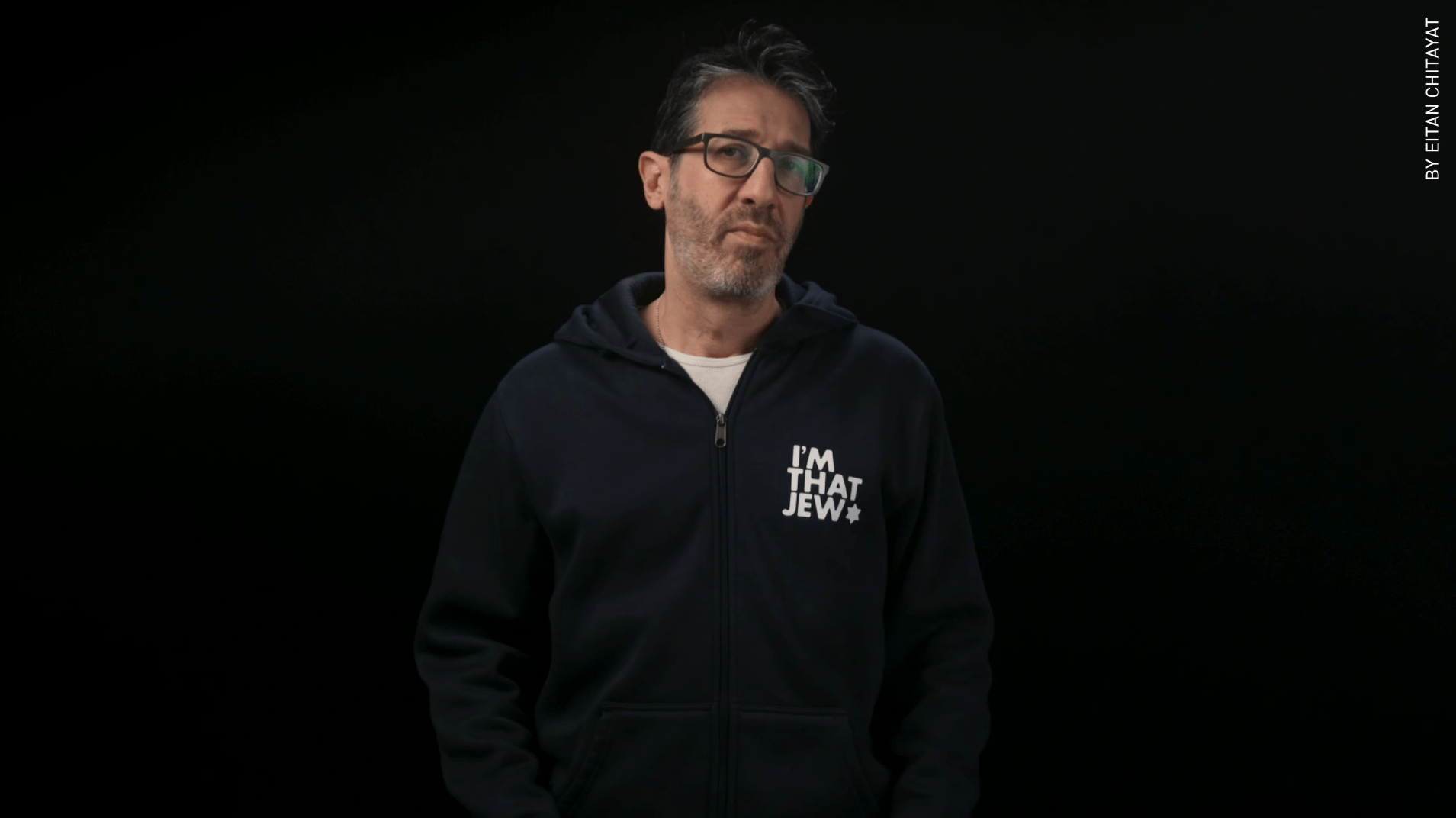
Wake the Hell Up
Wake the Hell Up is Eitan Chitayat’s warning that the threat of radical Islamist extremism doesn’t stop with Israel. He connects what Israelis have faced for decades with terrorist attacks across the US and Europe, arguing that this is not someone else’s problem and shouldn’t be ignored until it hits closer to home. The film asks people to look beyond slogans and social media, understand what extremist groups are actually saying and doing, and think more critically about the messages they are being fed. The message is simple: pay attention, understand what’s happening and don’t look away.
Watch the film: https://www.youtube.com/watch?v=guSLkGMtjPE
Key takeaways
- Radical Islamist extremism is not only a threat to Israel or Jews — it affects the wider world too.
- October 7 is part of a much longer pattern of terrorism, not an isolated event.
- Powerful images and slogans can be used to manipulate people when important context is left out.
- The film is about extremism and terrorism, not Islam or Muslims as a whole.
- Young people should be careful about getting their understanding of complex issues only from social media.
- The first step is paying attention, asking questions and not looking away.
FAQs
What is the central message?
Pay attention, think critically and do not allow propaganda or distance from the conflict to create complacency about extremist violence.
Why does Eitan reference attacks outside Israel?
He uses attacks in the United States, Europe and elsewhere to argue that extremist violence has crossed borders repeatedly and should not be dismissed as someone else’s problem.
Is the piece about Islam generally?
No. Eitan’s argument focuses on radical Islamist ideology and terrorist organizations, not Muslims or Islam as a whole.
Who is the film speaking to?
The message is aimed largely at people outside Israel – particularly Western audiences who may see terrorism in the Middle East as distant or disconnected from their own societies.
SCRIPT
I knew a guy, met him in 2000 while working together at an ad agency in Boston. He actually asked about Israel a lot at the time. There’d been relentless Hamas suicide bombings, killing our people, doing whatever they could to literally rip us to shreds, blowing up busses, restaurants, shops, and it was incessant. And he didn’t understand their hate and how we lived with it in our lives. What option do we have? I’d say we have to fight terror, but also continue. And they can’t beat our spirit. To him, terrorism was foreign. See, he’d never been abroad, not once. He couldn’t wrap his head around it.
What I remember about him was his beautiful naivete. I was actually envious of it. That said, I tried to explain how America couldn’t stay isolated forever. That Israel’s fight wasn’t just ours. It was for anyone who didn’t want Sharia law. It wasn’t restricted to the Palestinian quest for a land of their own. It was entwined with radical Islam, an ideology with no mercy and no borders, one that doesn’t discriminate, not even amongst those it supposedly fights for. His name was Bill Weems, and he was a warm, funny, and decent family man. He was also a passenger on United Flight 175, steered mercilessly into the World Trade Center by Al Qaeda on the morning of 9/11, 2001.
I didn’t know Bill a long time, but I’ll never forget him, and he’ll always be my friend. It’s been 23 years now. The number of people being killed in the name of Islamic radicalism continues to grow everywhere. You can hear anti-Western speeches by radical Islamic leaders, anti-Semitic chants on the streets of Europe or on campuses across the United States. Even these words they move people to hate, and they also target young children and teens, those who are most susceptible to lies. It’s all well thought out, taught, and funded, they’re global. They’re organized.
We live with the threat of radical Islam here in Israel. October 7 was our 9/11, but you, who watched all of that savagery and death from a distance, don’t you forget how it came home to you to the Boston Marathon in 2013, to the London train and bus warmings in 2005, the Paris Charlie Hebdo massacre in 2015, the Pittsburgh Tree of Life synagogue in 2018, the ongoing killings in Sudan, Nigeria, and Yemen, to Iranians in Iran in the form of state-sponsored terrorism and totalitarianism, to Syria and Iraq, where over 1 million people have been killed in civil wars, and these murders are a direct result of Islamic radicals sending a message to anyone standing in their way on the road to an Islamic caliphate, one that’ll be worse than hell on earth, where radical Muslims kill not just Jews but people of other faiths, their own people, anyone who doesn’t bow down before their perverted form of Islam.
These terror organizations are thrilled because the media is putting the spotlight for all the problems in our neighborhood on Israel. They’re happy that most people don’t see them for who they are, even though they’re out there for all to see. They can rest easy knowing that those ordinary young uninformed people aren’t even aware that they’re being manipulated to hate online with videos and propaganda intended to make them furious. Videos of dead people sell. The context of how and why it happened doesn’t. Terror groups like Hamas and Hezbollah know full well that in this crazy world we’ve become, facts don’t matter, just emotion. So they show Gen Z what they know they won’t like out of context, and they know that they’ll respond to. Here’s oppression. Here’s apartheid. Here’s genocide. Even though none of that’s going on, and the situation is much more complex than they’d have you believe.
Young people today want a just and fair world. While watching it all via their phones on TikTok 24/7, the short attention span phenomenon means they don’t dig deep enough to get different points of view and apply critical thinking, which is well critical, so they can see things for how they truly are instead of believing narratives delivered literally and ultimately by jihadists, who are pinching themselves at how naive people are, believing that radical Islam doesn’t affect them. That it’s someone else’s problem, Israel’s problem, and that in fact, Israel’s to blame for it.